

Last Updated: October 2026
Fortnite building feels impossible when another player turns one shotgun shot into six pieces and an edit before you find your wall bind. You do not need six more pieces. You need the right build for the problem in front of you.
This Fortnite building guide starts with useful mechanics: block the first angle, move, close a box, create protected height, and leave through an edit you can reset. The fancy retakes can wait.
We rechecked this guide during Fortnite Chapter 7 Season 4: Override and Fortnitemares 2026. Loot pools rotate, but walls, ramps, floors, cones, edits, and clear duo calls still decide Build-mode fights.
⚡ Quick answer: Learn one bind for each piece, make “wall then move” your damage reaction, build a complete defensive box, add one protected ramp, and practice open-shoot-reset edits. Do 20 clean minutes before live matches.
Table of Contents
- Learn the four build pieces
- Fix binds before chasing speed
- Build your first defensive box
- Use ramps without overbuilding
- Edit only with a plan
- Follow a 20-minute practice ladder
- Build with a duo
- Fix common beginner mistakes
- Read the FAQ
Fortnite Building Basics: Give Every Piece One Job
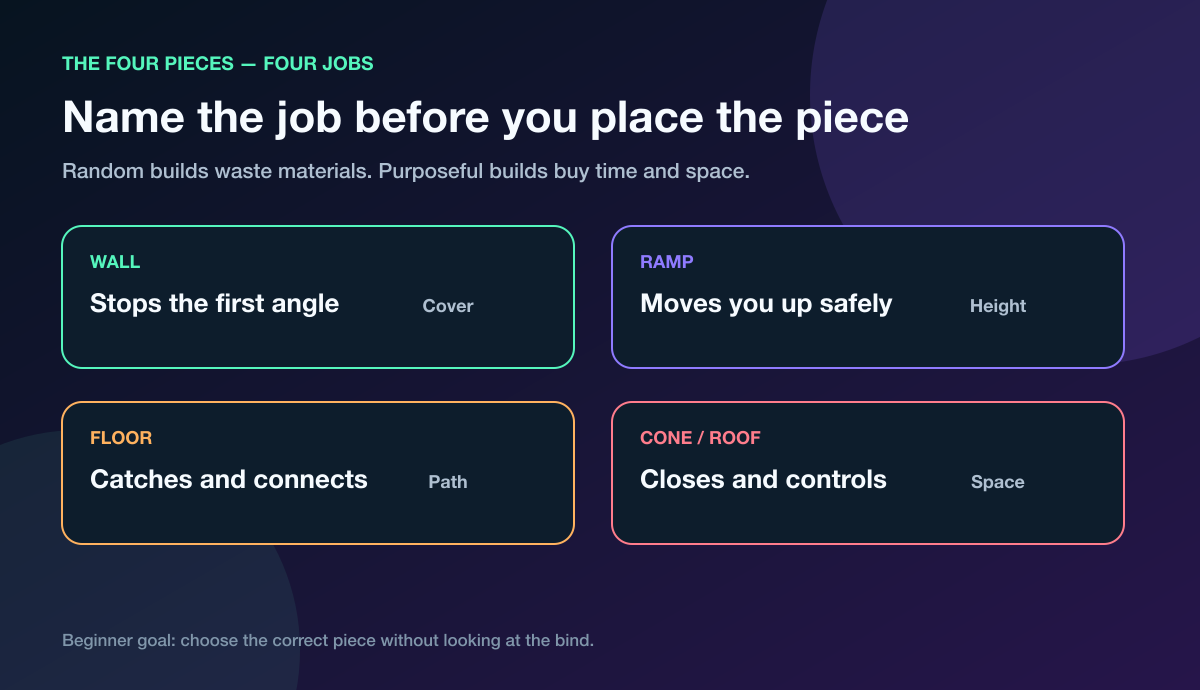
Beginners usually know the four pieces but still place the wrong one under pressure. Give each piece one simple job first.
- Wall: blocks the angle that can damage you right now.
- Ramp: creates protected upward movement and a higher peek.
- Floor: catches you, bridges a gap, or completes the bottom of a box.
- Cone or roof: closes the top of a box and controls movement inside a tile.
Wood, brick, and metal are not just three versions of the same resource. Choose with time in mind: use the material you can place now, then strengthen or move when the fight gives you room. A delayed “perfect” metal wall does nothing if the first shot already landed.
I believe the first real milestone is piece recall. You should be able to hear “wall,” “ramp,” “floor,” or “cone” and place it without looking at the HUD or your hands.
Run 10 placements of each piece while moving left, right, forward, and backward. If the wrong piece appears, slow down. Speed built on wrong inputs becomes louder panic.
Set Up Your Fortnite Build Binds Before You Grind
Your layout needs to let you move, aim, build, edit, reset, and return to a weapon without a finger traffic jam. Copying a pro’s binds does not copy their hand size, mouse grip, controller history, or thousands of reps.
Start with our Fortnite keybinds setup guide. It uses a one-change-at-a-time test so you can tell whether a new wall, ramp, edit, or reset bind actually helped.
Check five things:
- Can you place a wall while holding forward and changing direction?
- Can you reach every piece without looking down?
- Can you edit and reset without losing your weapon slot?
- Can you jump while pressing your floor or cone bind?
- Can you repeat the sequence for 20 minutes without hand tension?
Controller players should test build and edit sensitivity separately from look sensitivity. Keyboard players should protect WASD movement and avoid stacking every frequent action on one index finger.
Fortnite also offers Simple Edit, which selects the part of the structure you are looking at instead of requiring manual tile selection. Epic’s Simple Edit support page explains the setting and notes that it is unavailable in competitive modes. Use it to understand edit outcomes, but learn manual edits if Ranked or tournaments are your goal.
⚠️ Watch Out: Change one bind or sensitivity setting at a time. When you change five things together, you cannot identify what improved—or what broke.
Your First Useful Build: Wall, Move, Box, Decide
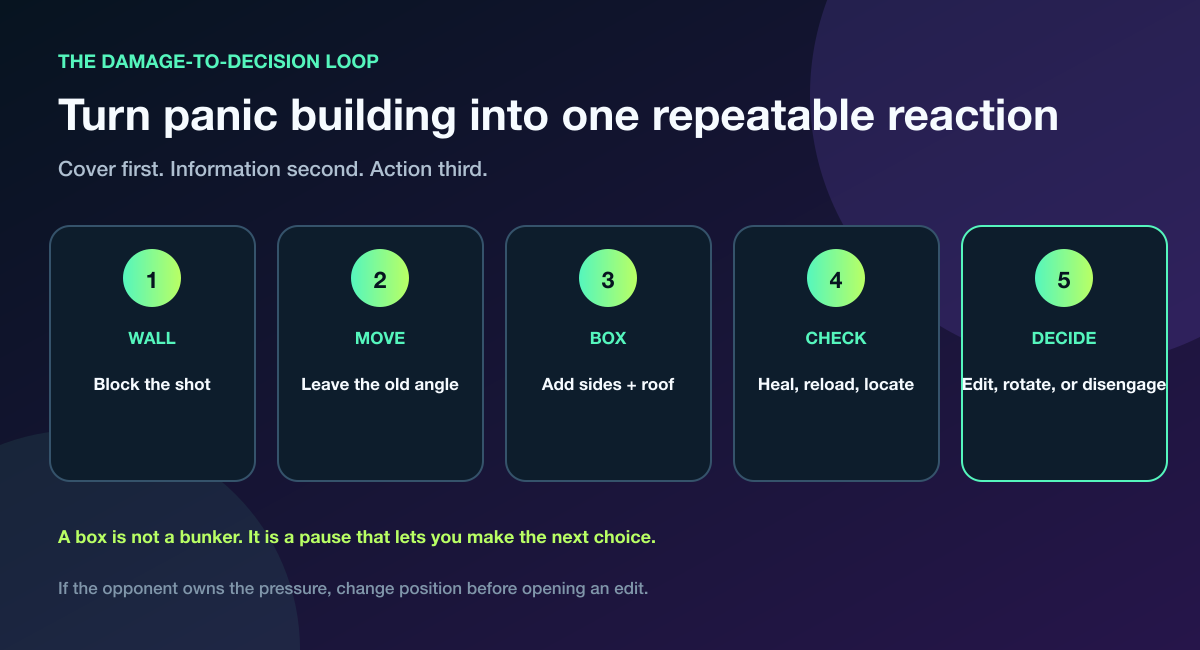
Getting shot should trigger a short sequence, not a 12-piece tower.
- Wall: block the angle where the damage came from.
- Move: leave the exact spot the opponent is already aiming at.
- Box: add the other walls, a roof, and a floor when needed.
- Check: locate the opponent, count your health, reload, and listen.
- Decide: edit a safe exit, rotate, heal, or pressure back.
The movement step matters. If you stand still behind one wall, the opponent already knows where to spray and where your next edit will appear. Move one tile, change height, or close the sides before you choose the next action.
A box is not a bunker. It is a pause button—use the second you bought to make a better decision.
Practice the sequence from four incoming angles. Have a friend shoot once from the front, left, right, or above. Your job is to block the correct angle, move, and finish the box without spinning builds into empty space.
Once you can do that, let the partner keep light pressure on the first wall. Now you must decide whether to reinforce, leave through another side, or claim a new tile. That is a real fight problem—not a freebuild performance.
How to Build in Fortnite Without Wasting Materials
Every placement needs a reason. If you cannot name the angle, path, or tile it controls, it probably does not need to exist.
Use a ramp to protect movement
A ramp is useful when it moves you toward a better angle while covering your body. Place the ramp, add a wall against the dangerous side, then stop building long enough to locate the opponent.
Do not hold forward and stack ramps until you lose track of the fight. Height only helps when you can use it without exposing your sides or letting the opponent break the support beneath you.
Add floors when the drop matters
Use a floor to catch a fall, bridge a short gap, or keep an opponent from entering from below. Throwing floors everywhere “because good players do it” burns materials and clutters your own movement.
Use cones to close space
A cone completes a roof and limits movement inside a box. Later, it becomes a control piece that can block a jump, ramp, or escape route.
That later layer is piece control. Our Fortnite piece control drills start with protection, then add claims, peeks, and resets. Do not skip the protection just to chase the full box.
Fortnite Beginner Builds Need Safe Edits, Not Fast Edits
An edit has one job: create a temporary advantage without handing the opponent a clean shot.
Use this order:
- Confirm that you own the piece.
- Stand where the unedited wall protects most of your body.
- Open a small, planned angle.
- Take the shot or move through.
- Reset the piece immediately.
- Return to your weapon or build mode.
Wide edits feel easy because they create a huge opening. They also expose more of your body and give the opponent a simple return shot. Start with a window or corner pattern you can close cleanly.
Your score is not “I completed the edit.” Count whether you stayed covered, selected the intended tiles, returned to your weapon, and reset after the action.
The 20-minute Fortnite edit course routine trains that full sequence. Run it after the basic box drill—not before—so your edit has a purpose inside a real defensive structure.
Fortnite Build Practice: A 20-Minute Ladder
Creative practice works when every block has one task and one pass condition. To find a specific practice island, Epic explains how to search by island name, code, or creator. Favorite the one you use so the environment stays consistent.
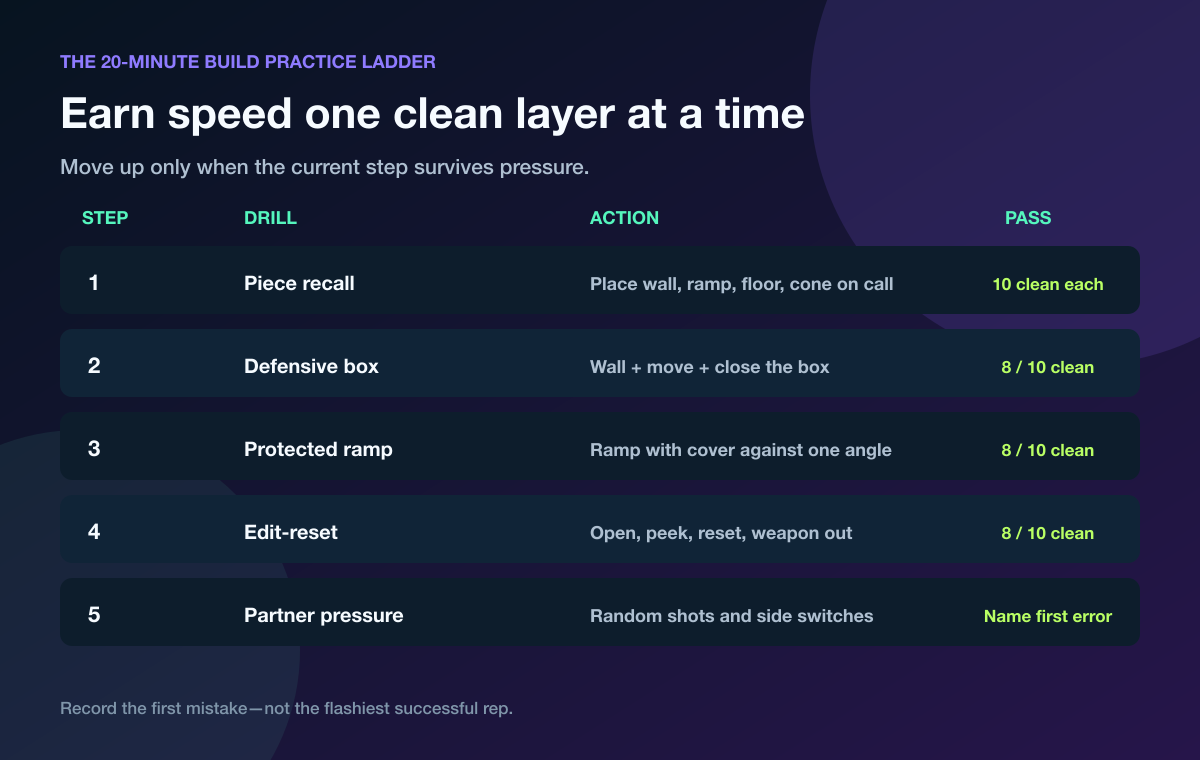
Run this ladder:
| Time | Drill | Pass condition |
| --- | --- | --- |
| 0:00–4:00 | Piece recall while moving | 10 correct placements per piece |
| 4:00–8:00 | Wall, move, complete the box | Eight clean reps out of 10 |
| 8:00–12:00 | Ramp with one protected side | Eight clean reps out of 10 |
| 12:00–16:00 | Open, peek, reset, weapon out | Eight clean reps out of 10 |
| 16:00–20:00 | Random pressure from a partner | Name the first error each rep |
“Clean” means the intended piece appeared, movement continued, the dangerous angle stayed covered, and you ended ready to fight. A fast mess does not count.
Do this routine for seven sessions before adding a flashy retake. Track only the first mistake in each failed rep: wrong piece, exposed side, movement break, open edit, empty weapon, or late reset.
Build With a Duo: Split the Jobs
Two players yelling “he’s there” while placing builds into each other is not coordination. Split the jobs before the fight starts.
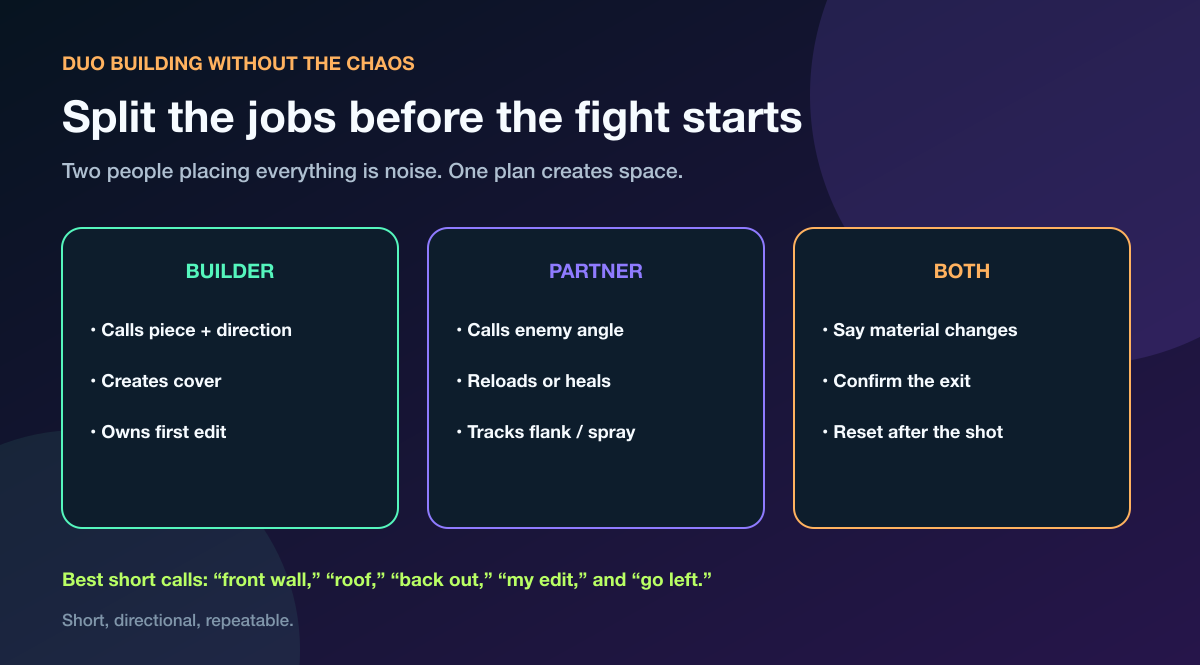
The player under pressure builds the first cover and calls the direction: “front wall,” “roof,” “back out,” “go left.” The partner watches the uncovered angle, tracks the enemy, reloads or heals, and calls the escape path.
When the builder owns the edit, say “my edit.” When the team is leaving, name the direction before opening the piece. Short calls beat explanations while bullets are landing.
This is where a steady partner speeds up improvement. Find a Fortnite teammate on Tapin who will repeat the same pressure drill, switch sides, and tell you exactly where the first opening appeared.
I believe a good duo is the fastest reality check for building. Freebuild tells you what your hands can do. A partner tells you whether those hands still work when somebody has a plan against you.
Common Fortnite Building Mistakes
Building after the damage instead of before the next shot
The first shot already happened. Do not stare at the damage number. Place cover against the next angle, then move.
Overbuilding without locating the opponent
Stop after the box or protected ramp. Listen, look, and choose. More pieces do not create information.
Practicing only one direction
Run every box, ramp, and edit from both sides. Your comfortable turn will not always match the safe escape route.
Opening an edit while healing or reloading
Finish the action or leave through another piece. An open wall plus an empty weapon is an invitation.
Chasing speed before clean inputs
Speed is the result of a sequence you no longer have to repair. Hit eight clean reps out of 10, then raise the pace.
Fortnite Building Guide FAQ
What should a beginner learn first in Fortnite building?
Learn the four piece binds, then make wall-move-box your automatic response to damage. That gives you cover, changes the enemy’s angle, and buys time for the next decision.
Should I learn 90s before box fighting?
No. Learn a defensive box, a protected ramp, and one safe edit-reset sequence first. A 90 can add height later, but it does not fix exposed sides or a bad decision inside your box.
Is Simple Edit good for beginners?
It can help beginners understand what different edits do with fewer inputs. Epic says Simple Edit is unavailable in competitive modes, so players aiming for Ranked or tournaments should also practice manual tile selection.
How long should I practice Fortnite builds each day?
Start with 20 focused minutes. Stop when errors rise from fatigue, record the first repeated mistake, and test the same sequence in live matches.
How do I stop panic building?
Reduce the reaction to five steps: wall, move, box, check, decide. Practice against random incoming angles until the first correct wall appears without conscious searching.
Build for the Next Decision
Useful Fortnite building is not about producing the most pieces. It is about placing the piece that blocks damage, creates movement, controls space, or opens a safe action.
Start with wall-move-box. Add one protected ramp, one clean edit-reset, and one partner who will pressure the routine honestly. That foundation transfers when the map, loot pool, and season change.